
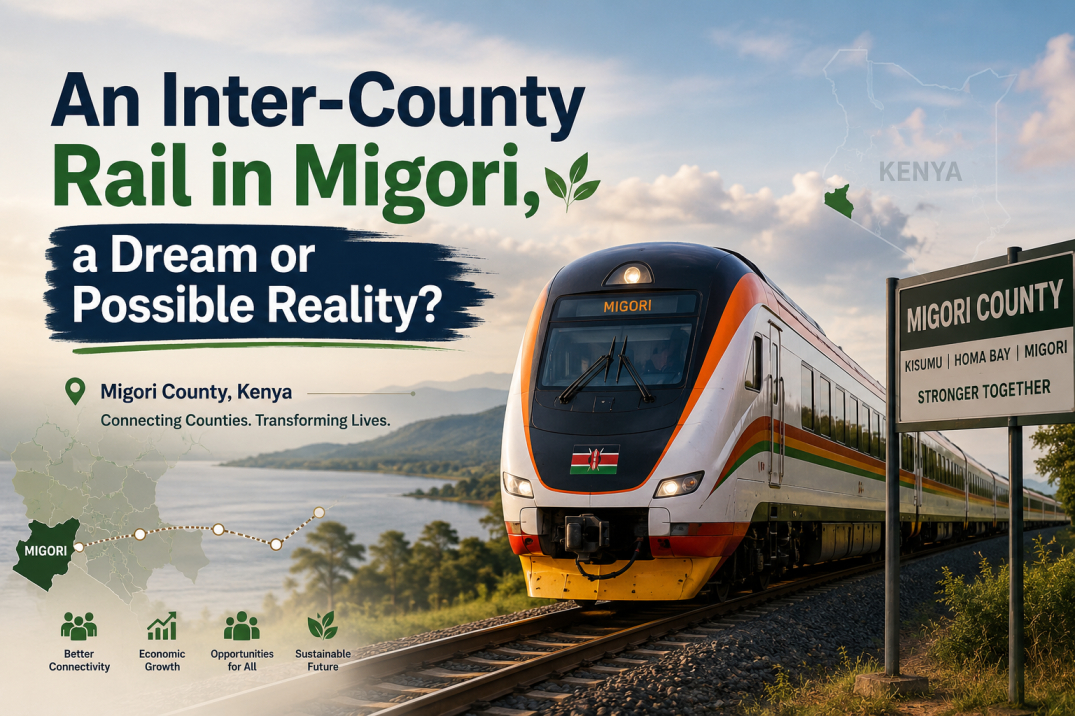
For many years, the idea of a railway passing through Migori County has lived more in conversations than in concrete plans. But today, the question must be asked more seriously than ever before: is a rail system in Migori just a dream, or is it a possible reality?
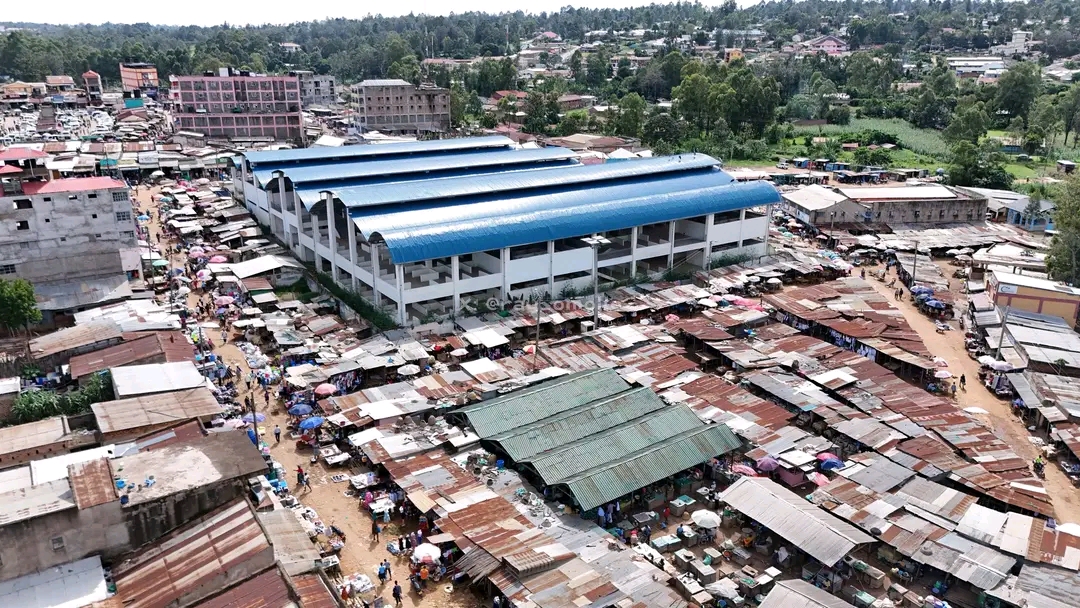
Migori County sits in a uniquely strategic position. Bordering Tanzania and touching the vast waters of Lake Victoria, it connects agriculture, fishing, and cross-border trade into one powerful economic corridor. From the sugar belt regions of Awendo, Uriri, and Rongo to the fishing hubs of Sori and Muhuru Bay, the county is rich in both natural resources and human potential. Yet, despite this, transport remains one of the biggest limitations to growth.
Roads, while essential, are increasingly strained. Heavy trucks transporting sugarcane, fish, and goods wear them down quickly, leading to constant repairs and rising costs. Travel times remain long, and access to markets is often unreliable.
A light rail or modern commuter rail system connecting key towns such as Migori Town, Awendo, Uriri, Rongo, Sori, Muhuru, Kehancha, and Ntimaru could fundamentally transform the region. It would lower the cost of transporting goods, open up rural areas to investment, and create a faster, safer, and more efficient way for people to move.
Critics will point to cost — and rightly so. Infrastructure of this scale requires significant investment, running into hundreds of billions of shillings. However, the real question is not whether it is expensive, but whether it is valuable. Around the world, regions that have invested in rail systems have unlocked economic growth that far outweighs the initial cost. Rail is not just transport; it is a long-term economic engine.
Moreover, such a project does not have to be built all at once. A phased approach can make it achievable. Starting with high-impact sections like Migori Town to Rongo, Uriri, and Awendo would already create a strong backbone. From there, expansion toward Sori, Muhuru, and the Kuria region can follow as demand and investment grow.
Beyond economics, a railway would also bring social transformation. It would connect communities, improve access to education and healthcare, and create jobs both during construction and operation. It would give young people a reason to believe that development is not just happening elsewhere, but right at home.
The dream of a railway in Migori County is not unrealistic. It is ambitious, yes — but ambition is what drives progress. With proper planning, political will, and public-private partnerships, this becomes tomorrow’s defining achievement.
The time has come to stop seeing rail as a luxury and start recognizing it as a necessity. Migori County does not lack potential; it only needs the infrastructure to unlock it.
For many years, the idea of a railway passing through Migori County has lived more in conversations than in concrete plans. But today, the question must be asked more seriously than ever before: is a rail system in Migori just a dream, or is it a possible reality?
Migori County sits in a uniquely strategic position. Bordering Tanzania and touching the vast waters of Lake Victoria, it connects agriculture, fishing, and cross-border trade into one powerful economic corridor. From the sugar belt regions of Awendo, Uriri, and Rongo to the fishing hubs of Sori and Muhuru Bay, the county is rich in both natural resources and human potential. Yet, despite this, transport remains one of the biggest limitations to growth.
Roads, while essential, are increasingly strained. Heavy trucks transporting sugarcane, fish, and goods wear them down quickly, leading to constant repairs and rising costs. Travel times remain long, and access to markets is often unreliable.
A light rail or modern commuter rail system connecting key towns such as Migori Town, Awendo, Uriri, Rongo, Sori, Muhuru, Kehancha, and Ntimaru could fundamentally transform the region. It would lower the cost of transporting goods, open up rural areas to investment, and create a faster, safer, and more efficient way for people to move.
Critics will point to cost — and rightly so. Infrastructure of this scale requires significant investment, running into hundreds of billions of shillings. However, the real question is not whether it is expensive, but whether it is valuable. Around the world, regions that have invested in rail systems have unlocked economic growth that far outweighs the initial cost. Rail is not just transport; it is a long-term economic engine.
Moreover, such a project does not have to be built all at once. A phased approach can make it achievable. Starting with high-impact sections like Migori Town to Rongo, Uriri, and Awendo would already create a strong backbone. From there, expansion toward Sori, Muhuru, and the Kuria region can follow as demand and investment grow.
Beyond economics, a railway would also bring social transformation. It would connect communities, improve access to education and healthcare, and create jobs both during construction and operation. It would give young people a reason to believe that development is not just happening elsewhere, but right at home.
The dream of a railway in Migori County is not unrealistic. It is ambitious, yes — but ambition is what drives progress. With proper planning, political will, and public-private partnerships, this becomes tomorrow’s defining achievement.
The time has come to stop seeing rail as a luxury and start recognizing it as a necessity. Migori County does not lack potential; it only needs the infrastructure to unlock it.





Leave a Reply